I just got back from covering the 59th Baeksang Arts Awards on May 6, 2026, and after five years on that press beat, I can tell you the energy this year was different. It wasn’t just about the dazzling star power or which rom-com swept the popularity awards. In the acceptance speeches, particularly for Best Screenplay and Best Director, a theme emerged: a quiet pride in telling stories with layers. We’re in an era where K-dramas are moving beyond explicit emotional declarations and are embedding their deepest meanings in symbols, settings, and silence.
Honestly, it’s a shift I’ve been tracking all year. While the blockbuster hits still deliver the heart-fluttering romance and high-stakes makjang we love, the most critically acclaimed works of 2026 are demanding more from us as viewers. They are trusting us to look closer. From massive hits dominating the Netflix Top 10 to sleeper weekend dramas, there’s a current of profound subtext running through the Korean television landscape. If you only focus on the main plot, you’re missing the real story.
The New Status Symbol: Art as Character Arc
For years, a character being a chaebol heir was all the backstory we needed. Their status was defined by their company, their suit, their car. But in 2026, wealth is being depicted differently. It’s being channeled through art, and not just as a pretty backdrop. The art a character creates or collects has become a direct reflection of their internal state.
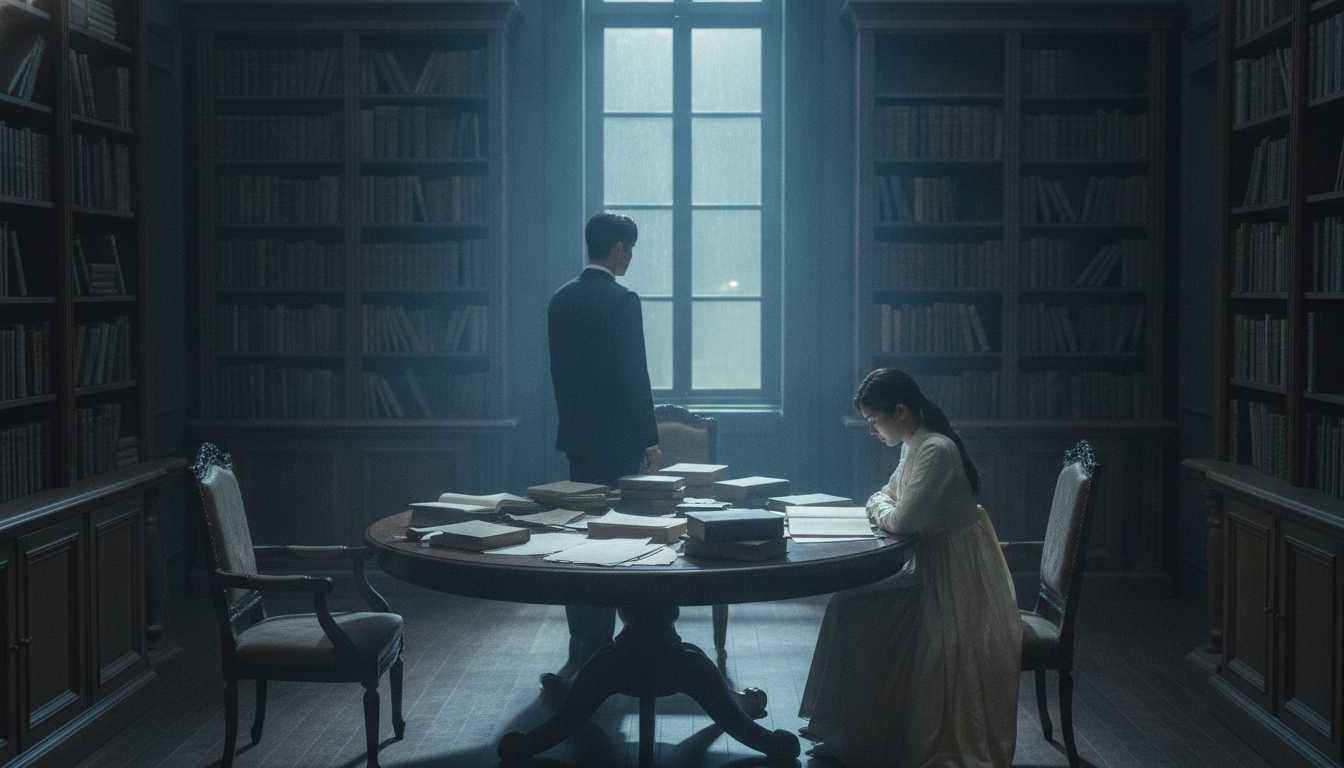
Take JTBC’s recent 12-episode melodrama, The Gilded Cage, which aired this spring. It was a quiet show, never breaking 5% in Nielsen Korea ratings, but it developed a fiercely loyal following. The female lead, a gifted artist trapped in a stifling marriage, begins the series painting hyper-realistic, technically perfect traditional Korean landscapes. They are beautiful but emotionally sterile. As she begins to reclaim her identity, her art transforms. The brushstrokes become looser, the colors bolder, and by the finale, she’s creating massive, chaotic abstract pieces that are bursting with the life she was denied. The screenplay was brilliant because her emotional turning point wasn’t a tearful monologue; it was the moment she threw away her fine-hair brushes and started painting with her hands. Her art was her character development. We’re seeing this trend pop up more and more, where a character’s journey is charted not through dialogue, but through their evolving creative expression.
Post-Pandemic Loneliness in the Seoul cityscape
We’ve all seen the glittering shots of the Seoul skyline, but lately, directors are using the city to tell a much more somber story. It’s a visual exploration of the loneliness that lingers in our hyper-connected, post-pandemic world. This was masterfully executed in Netflix’s smash-hit thriller Seoul Gridlock, an 8-episode series that dropped in April 2026 and immediately shot into the Global Non-English Top 10, staying there for over a month.
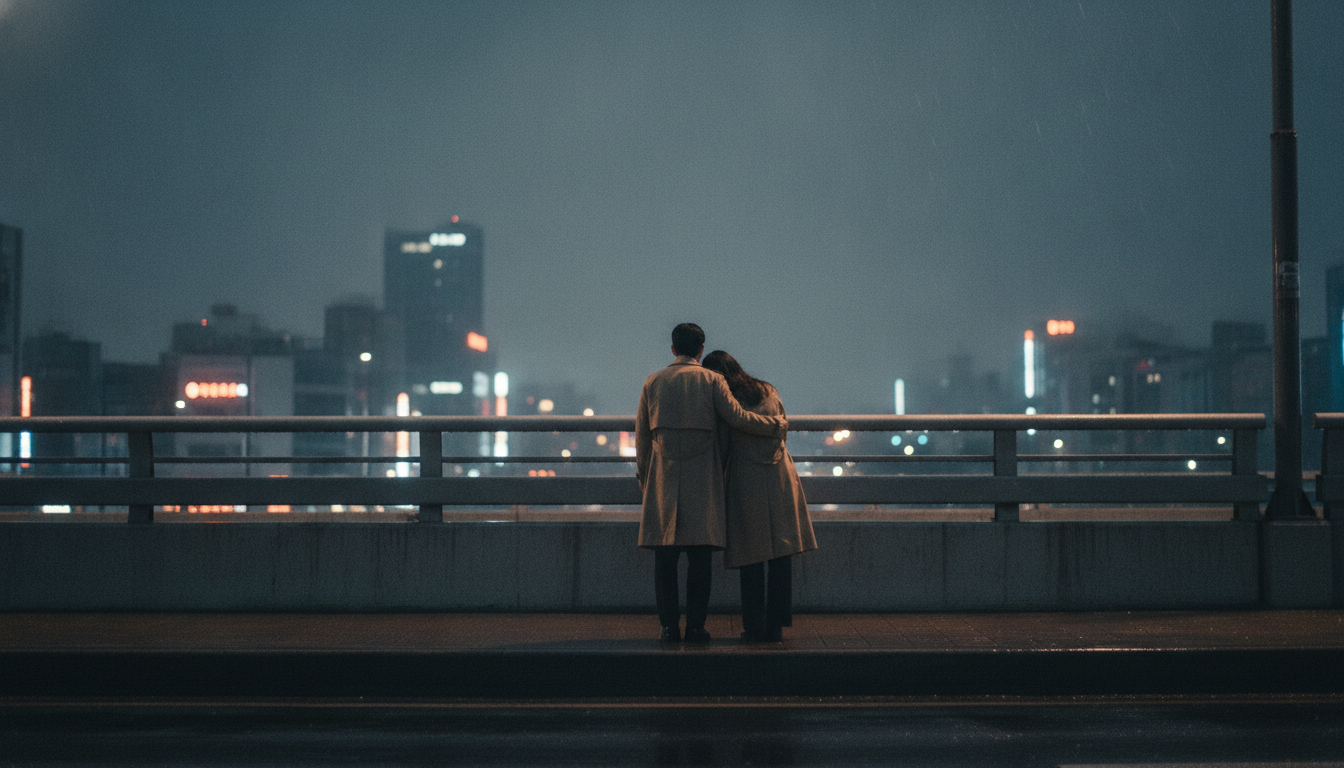
On the surface, it was a fast-paced cyber-crime story. But its true genius lay in its cinematography. The director consistently used wide, static shots to frame a single character against the immense, impersonal backdrop of Gangnam’s glass towers or the sprawling apartment complexes along the Han River. Characters would have intense, emotional conversations over the phone, but we would see them in separate shots, utterly alone in their respective spaces. The drama’s most haunting image wasn’t the villain’s threat, but a simple shot of the protagonist eating convenience store ramen while watching a million lights twinkle in the windows across the city, a stark reminder of the paradox of being surrounded by people but feeling completely isolated. It’s a theme that clearly resonated globally, proving that this feeling of urban solitude is a universal language.
Food as the Unspoken Language of Reconciliation
Food has always been central to K-dramas, but 2026 has elevated it from simple PPL (product placement) for fried chicken joints into a powerful narrative tool for healing. It’s become the language for characters who lack the words to apologize, forgive, or say “I love you.” No show has done this better than the KBS2 weekend drama, The Third Son’s Tofu, which just aired its 50-episode finale on June 9, 2026, to a staggering 35.4% nationwide rating according to Nielsen Korea.
The drama revolved around a fractured family that owned a generations-old handmade tofu shop. The most poignant moments had almost no dialogue. Instead, the estranged father would leave a bowl of freshly made sundubu-jjigae (soft tofu stew) for his son after a fight. The rebellious granddaughter, who initially despised the family business, would be caught secretly trying to perfect her late grandmother’s soybean grinding technique. The show’s OST chart performance was modest, but its emotional impact was not. The climax wasn’t a dramatic confrontation but a scene where three generations of men finally sat down and shared a meal in silence, the simple act of passing the side dishes conveying a forgiveness that words never could. It’s a beautiful reminder that sometimes the most profound connections are rebuilt not through grand gestures, but through a shared taste of home.
Meta-Commentary on the ‘Live-Shoot’ System
This is a fascinating, almost “inside baseball” trend, but one that adds incredible depth. A few daring dramas have started embedding a subtle critique of the industry’s infamous “live-shoot” production system within their own narratives. The most blatant (and brilliant) example was tvN’s 16-episode series Episode 16, which focused on a pair of screenwriters. It aired this past winter on the competitive Wednesday-Thursday 22:30 KST slot.
The show was filled with meta-commentary. The writer characters were constantly pulling all-nighters, getting frantic calls from producers about last-minute script changes, and suffering from burnout—all things that happen in a real live-shoot. In one episode, a character laments, “The ending is writing us, we’re not writing the ending,” a direct jab at how rushed production schedules can compromise creative integrity. The drama’s own pacing felt intentionally frantic in later episodes, mirroring the chaos it was depicting. While it caused some debate among viewers who weren’t aware of the industry context, for critics and long-time fans, it was a bold and clever way to use the medium to comment on the very conditions of its creation. Watching it felt like being let in on a secret, a shared acknowledgment of the pressures behind our favorite shows.
How You Can Start Noticing the Subtext
Want to train your eye to catch these hidden meanings? It’s easier than you think. 1. Look for Repetition: Does a certain color, object, or piece of music appear every time a character is distressed? That’s not a coincidence; it’s a symbol. 2. Listen to the Instrumentals: The vocal OSTs are great, but the instrumental score often tells the real emotional story. Notice the music in scenes without dialogue. 3. Analyze the Framing: Pay attention to how characters are positioned in a room or a landscape. Are they small in a big space? Is there a physical object between them during a conversation? This is the director speaking to you. 4. Value the Silence: In K-dramas, what isn’t said is often more important than what is. A long, silent gaze or an unanswered question is packed with meaning.
Key Takeaways
The biggest takeaway from the K-drama landscape in the first half of 2026 is the growing trust between creators and their audience. We are being invited to participate in the story, to connect the dots, and to find meaning in the quiet moments. While epic romances and thrilling plot twists will always be the engine of Hallyu, this new wave of symbolic, multi-layered storytelling is what will elevate the art form and keep us all critically engaged and emotionally invested for years to come.
Found this helpful? Bookmark us! ⭐