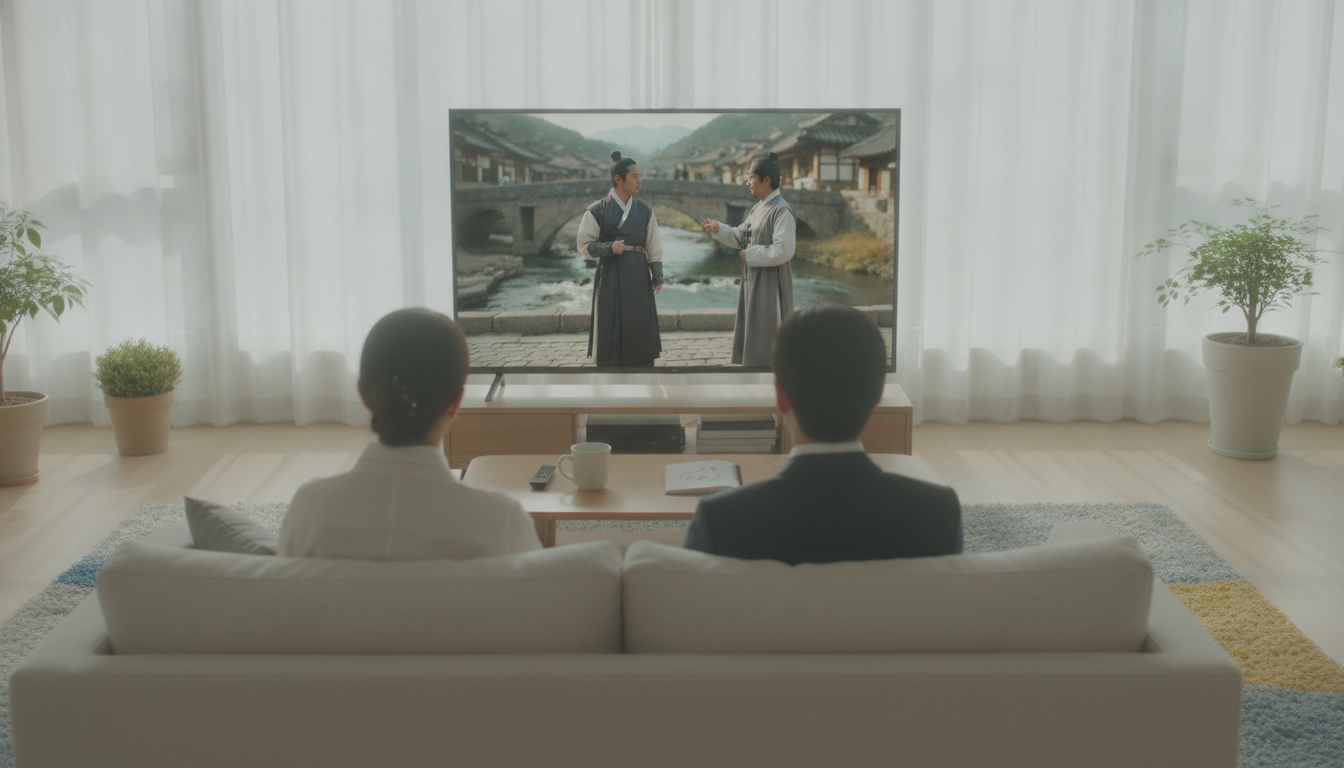
Hello and welcome back to K-Screen Daily! It’s your host, ready to unpack the latest and greatest from the world of Korean dramas. The 2026 lineup has been absolutely stellar, hasn’t it? From the high-budget sci-fi epic that has everyone talking to the quiet, slice-of-life romance that’s healing our souls, we’ve been spoiled for choice. But as we binge-watch, it’s easy to get swept up in the stunning visuals, whirlwind romances, and shocking plot twists. Sometimes, the most profound storytelling moments aren’t in the dialogue; they’re hidden in plain sight.
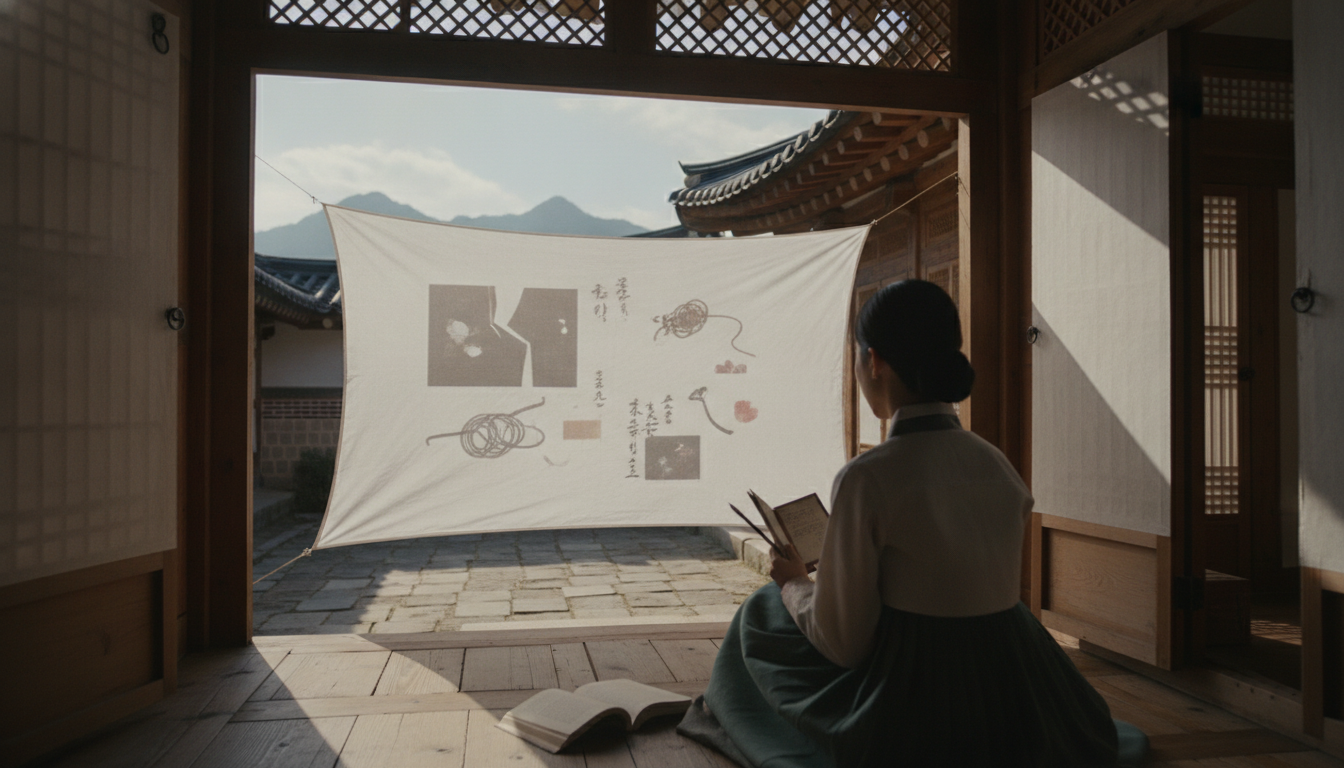
Today, we’re putting on our detective hats to explore the subtle symbolism and cultural codes embedded in this year’s dramas. These are the layers that transform a good show into a masterpiece, and once you see them, you’ll never watch K-dramas the same way again. We’ll explore how a simple bowl of noodles can say more than a love confession and how the color of a character’s coat can foreshadow their entire fate.
The Language of Food: More Than Just a Meal
It’s no secret that K-dramas feature a lot of food. But the significance of these meals goes far beyond simple product placement for ramyun brands like Nongshim or Ottogi. In the Korean cultural context, sharing a meal is a profound act of community and relationship-building. Think about the heart-wrenching family drama that recently aired on JTBC. The estranged mother and daughter never spoke about their feelings, but their entire relationship was charted by the meals they didn’t share. The turning point wasn’t a tearful apology; it was the moment the mother cooked a pot of kimchi jjigae, just the way her daughter likes it. That single act said, “I remember you. I care for you. I’m sorry.”
This year, we’ve seen this taken to a new level. In the legal thriller that dominated the ratings, the lone-wolf prosecutor’s diet of cheap convenience store gimbap triangles and instant coffee symbolized his isolation and self-neglect. As he started to trust his team, we saw them sharing meals at pojangmachas (tented street stalls), the steam from the tteokbokki and soju cups creating a fog of camaraderie. This isn’t just about feeding characters; it’s about feeding their relationships. The global rise of K-food, which saw its market size grow significantly in recent years, mirrors this on-screen prominence. The Korean Food Promotion Institute has noted the powerful role media plays in this trend, and drama writers are using this global familiarity to tell even deeper stories.
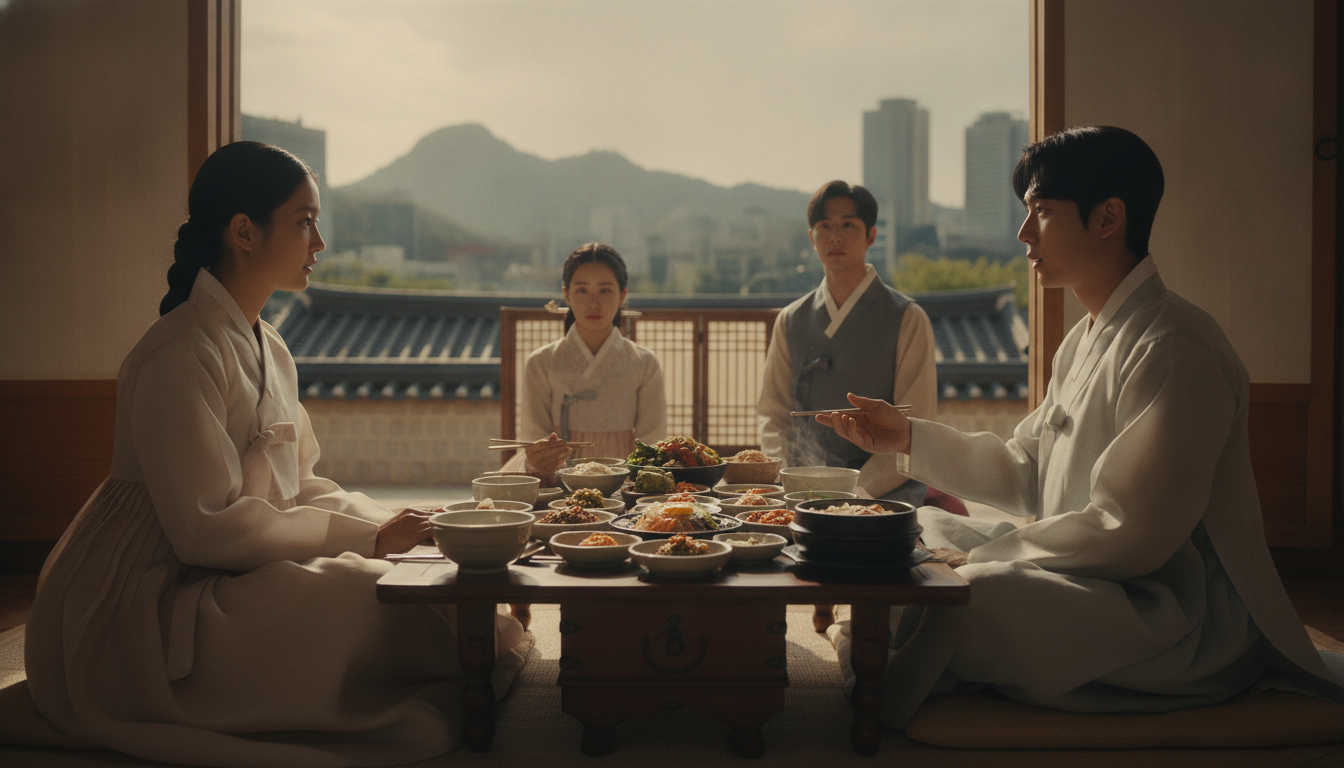
Your Practical Tip: Pay attention to who is cooking for whom. Is a character eating alone or with others? Are they eating a home-cooked meal or instant food? The answers to these questions often reveal more about their emotional state and relationships than pages of dialogue ever could.
Color Theory and Character Arcs
Cinematography in 2026 K-dramas is more sophisticated than ever, and a key tool in the director’s arsenal is color. A character’s journey is often painted across the screen through carefully chosen color palettes in their wardrobe and the drama’s overall lighting. Remember the female lead in that buzzy revenge melodrama on Netflix? She began the series in washed-out beiges, grays, and pale blues, blending into the background as a timid victim. But as her plan for vengeance took shape, her wardrobe transformed. She started wearing sharp, saturated jewel tones—emerald greens, blood reds, and royal blues. The colors screamed power and intent before she even spoke a word.
This isn’t a new trick, but directors in 2026 are using it with incredible nuance. We’re seeing entire scenes graded with a specific color wash to convey a mood. Flashbacks to a happier time are often bathed in a warm, golden-yellow light, while present-day scenes of conflict might be filtered with a cold, sterile blue. The masters of Korean cinema, like director Park Chan-wook, have long been celebrated for their meticulous use of color to create atmosphere and meaning. Today’s drama directors are applying these same cinematic principles to the small screen. The result is a visually rich experience where the environment itself becomes a character, reflecting the protagonist’s inner turmoil or peace.
Your Practical Tip: The next time you start a new drama, take note of the main character’s color palette in the first episode. As the series progresses, watch how it changes. Does it become brighter, darker, or more chaotic? Their wardrobe is a secret roadmap to their emotional development.
The Symbolism of Rain and Umbrellas
If you’ve watched more than a few K-dramas, you know that rain is never just rain. It’s a major narrative device. A sudden downpour can represent overwhelming sadness, a moment of cathartic release, or the intervention of fate. In Korea, the summer monsoon season, or Jangma, which typically hits between late June and July, is a significant part of the year. This real-world weather phenomenon has seeped into the country’s storytelling, making rain a powerful and relatable symbol.
The umbrella, by extension, is one of the most potent symbols in the romance genre. It represents comfort, protection, and the creation of a private, intimate space for two people amidst a chaotic world. In the time-slip romance that was a huge hit earlier this year, the male lead first meets the female lead by sheltering her under his yellow umbrella. That yellow umbrella became their symbol, reappearing in key moments throughout the series. When he lost his memory, she tried to jog it by showing him a yellow umbrella, a desperate attempt to rekindle the safety and connection it once represented. By 2026, this trope is so established that writers are now subverting it. We saw a brilliant example in a recent thriller where a character used an umbrella not to shelter, but to hide a weapon, twisting a symbol of protection into one of deceit and danger.
Objects as Storytellers: From Watches to Books
Props in K-dramas are rarely just props. They are anchors for memory, emotion, and theme. A recurring object often acts as a silent narrator, carrying the weight of the story’s history. Take the classic example of a luxury watch. In the corporate drama that just wrapped on tvN, the chaebol heir’s Patek Philippe watch, a real-world timepiece that can easily cost upwards of $30,000, wasn’t just a symbol of his wealth. It was a gift from his dying father, and its constant ticking was a reminder of the time he was losing with him and the heavy responsibility he was about to inherit. When the watch finally broke during a moment of intense crisis, it symbolized his own breaking point.
Books and poetry also serve this function beautifully. Characters often communicate their deepest, most unspoken feelings through the words of others. A character might gift a specific book of poetry, hoping the recipient will understand the message hidden within a bookmarked page. The works of beloved poets like Yoon Dong-ju, whose poems on themes of hope and shame resonate deeply in the Korean psyche, often make appearances. In a recent slice-of-life drama, a shy character couldn’t confess his love directly. Instead, he left a copy of a poetry anthology on his love interest’s desk, open to a poem about finding a star in the darkest night. It was the most romantic confession in the entire show, and it was completely silent.
Your Practical Tip: When an object gets a close-up shot or is mentioned multiple times, pay attention. The drama is telling you that this item matters. Ask yourself: What does it represent? What memories are attached to it?
Unpacking Cultural Nuances: Jeong (정) and Hierarchy
For international fans, some of the most profound hidden meanings are rooted in cultural concepts that don’t have a direct English translation. Perhaps the most important of these is jeong (정). It’s a complex idea that encompasses attachment, compassion, community, and a deep, binding affection that can exist between friends, family, lovers, and even colleagues. It’s the reason a grumpy landlady will leave a bag of home-grown vegetables outside her tenant’s door. It’s the reason team members in an office will fiercely protect each other from a tyrannical boss. Many 2026 dramas are built around the formation of jeong among an unlikely group of people who become a found family.
Another layer is the social hierarchy embedded in the Korean language itself. The way characters address each other instantly defines their relationship. A switch from the formal “-sumnida” (습니다) ending to the more polite but less formal “-yo” (요) or, most significantly, to the informal banmal (반말), signifies a major shift in intimacy and status. In that military-themed drama from a few months ago, the moment the stern captain finally used banmal with his subordinate was a bigger emotional payoff than any action scene. It was a sign of ultimate trust and acceptance. Understanding these linguistic cues, which are often subtly translated in subtitles, opens up a whole new dimension of character dynamics. It’s a level of detail that shows how meticulously crafted these stories are, reflecting a culture where relationships are built on complex layers of respect and intimacy.
Key Takeaways
Food is Connection: Pay attention to shared meals. They are a barometer for the health of any relationship in a K-drama. Colors Tell a Story: A character’s wardrobe and the drama’s lighting are visual clues to their emotional journey. Muted tones often mean suppression, while bold colors signal empowerment. Weather and Props Matter: Rain is never just a storm, and an umbrella is rarely just for staying dry. Recurring objects are vessels for memory and unspoken emotions. Culture is Key: Understanding concepts like jeong and the nuances of Korean honorifics can unlock the deepest emotional layers of the story that subtitles alone can’t always convey.
Watching K-dramas with this analytical eye doesn’t diminish the fun; it deepens it. You start to appreciate the incredible artistry and intentionality that goes into every single frame. What hidden meanings have you spotted in your favorite 2026 dramas? Let me know in the comments below!
Found this helpful? Bookmark us! ⭐