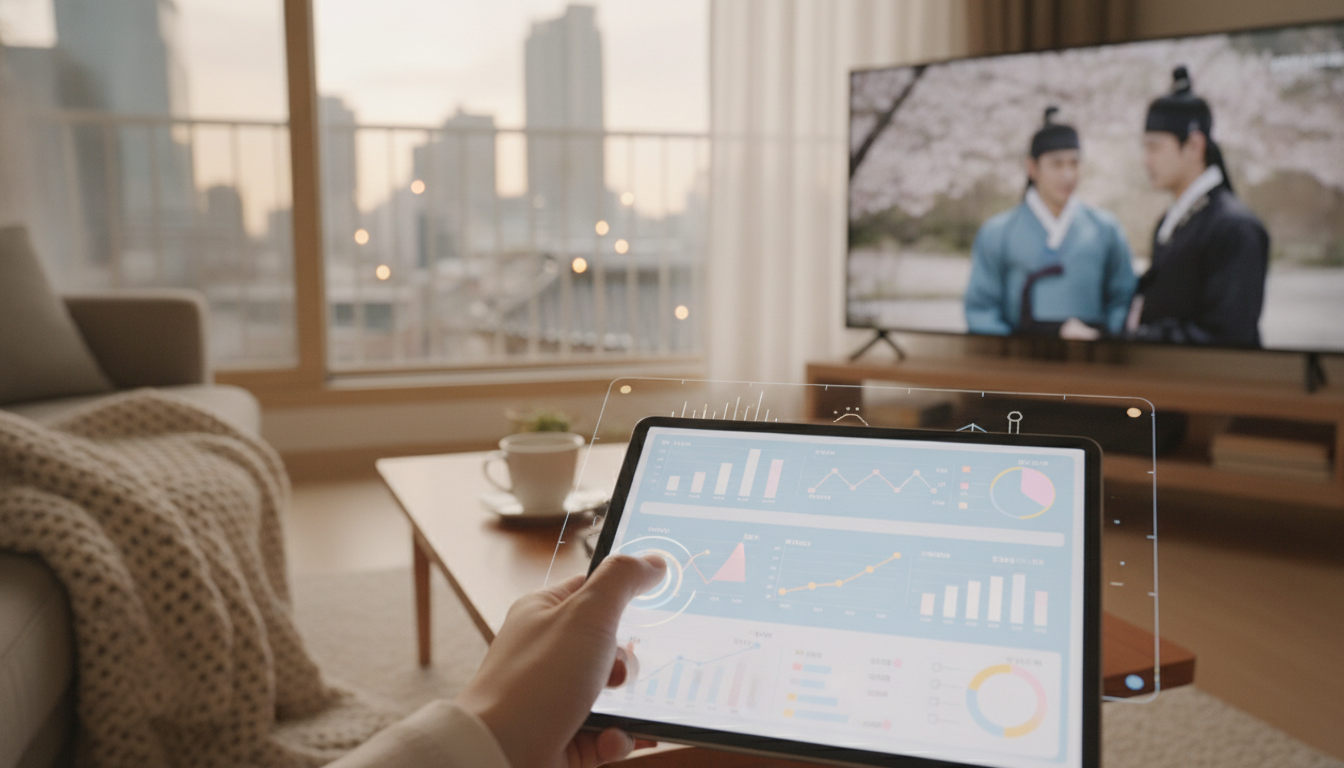
Hello K-drama family! It’s May 25, 2026, and what a year it’s been for Korean content so far. From heart-stopping thrillers to heartwarming romances, our screens have been absolutely saturated with incredible stories. But as we navigate this golden age of K-dramas, a question often pops up in fan discussions and industry analyses: “How well is this drama doing?” And more importantly, “What do ‘ratings’ even mean anymore?”

As a critic who devours every new release, I’ve seen firsthand how the conversation around success metrics has evolved. Gone are the days when a single AGB Nielsen percentage was the undisputed arbiter of a drama’s fate. In 2026, the landscape is far more complex, a multi-faceted mosaic that requires us to look beyond just raw numbers. Today, we’re going to break down the current state of K-drama rating analysis, giving you the insights you need to truly understand a drama’s impact.
The Shifting Landscape of Broadcast vs. Streaming Metrics
For decades, the benchmark for K-drama success was unequivocally tied to traditional television viewership ratings provided by agencies like AGB Nielsen Korea and TNmS. These numbers, reflecting the percentage of South Korean households tuned into a specific show, dictated advertising revenue, celebratory headlines, and even cast bonuses. A drama hitting 20% on a major public broadcaster like KBS, SBS, or MBC was considered a national phenomenon, a level of success that still holds significant cultural weight in 2026. Think of iconic dramas from the past that regularly broke these thresholds, establishing a high bar.
However, the rise of cable networks like tvN and JTBC completely changed the game, lowering the conventional “hit” threshold. A 10% rating on cable is often seen as equivalent to a 20%+ rating on public TV due to the smaller reach of cable channels. Now, in 2026, the streaming revolution has introduced entirely new metrics, making a direct comparison between a drama airing on KBS and one exclusively on Netflix a near impossibility. The conversation has broadened to include global viewership, completion rates, and social media buzz, often eclipsing traditional linear TV ratings in terms of international perception.

What Do AGB Nielsen and TNmS Really Measure in 2026?
Despite the pervasive influence of streaming, traditional ratings still matter, especially for dramas airing on South Korean terrestrial and cable channels. AGB Nielsen Korea remains the dominant player, alongside TNmS, providing viewership data based on a panel of selected households equipped with special meters. AGB Nielsen, for instance, typically uses a sample size of approximately 4,000 households across the country, aiming to be representative of the national demographic. These meters automatically record what channels are being watched, and the data is then extrapolated to provide national viewership percentages.
It’s crucial to understand that these numbers primarily reflect linear, live television viewing in South Korea. They do not account for viewers who watch via time-shifting (recording and watching later), VOD (Video-on-Demand) services, or, most significantly, international streaming platforms. So, while a drama might achieve a modest 5% rating on a cable channel, it could be absolutely dominating the global Netflix charts. This disparity often leads to confusion, particularly for international fans who might see a drama trending worldwide but then read about its “low” domestic ratings. These metrics are a snapshot of a specific viewing habit, not the entire picture of a drama’s reach or cultural impact.
The Rise of Streaming Metrics: A New Success Yardstick
For international fans, and increasingly for the industry itself, streaming performance has become the paramount indicator of a K-drama’s global success. Platforms like Netflix, Disney+, Wavve, TVING, and Coupang Play now offer a diverse range of exclusive content, and with it, new ways to measure viewership. Netflix, for example, has been transparent with its weekly Global Top 10 list for TV (Non-English) since 2021, showcasing the most-watched titles based on “hours viewed.” This metric offers a clearer picture of a drama’s international reach and sustained engagement, rather than just a peak domestic viewership percentage.
Beyond raw hours, streaming platforms also analyze completion rates – how many viewers start a drama and finish it – and rewatch rates. These deeper engagement metrics are invaluable for understanding true audience investment, something traditional ratings simply can’t capture. A drama might have a massive initial viewership, but if few people complete it, its overall impact might be questioned. This shift in measurement has empowered niche genres and experimental storytelling, allowing dramas that might not resonate with the broad domestic linear TV audience to find a massive, dedicated global following. It’s a testament to the diverse tastes of the international K-drama community.
The Power of Buzz and Social Media: Beyond the Official Numbers
In 2026, a drama’s success is not just about numbers; it’s also about its cultural footprint and “buzz.” Social media engagement, online community discussions, and critical acclaim now play an enormous role in shaping public perception. Platforms like X (formerly Twitter), Instagram, TikTok, and popular Korean online forums like Theqoo and Pann are vibrant ecosystems where dramas are discussed, dissected, and celebrated in real-time. A drama that generates viral memes, sparks intense theories, or features quotable lines often achieves a level of cultural penetration that transcends any official rating.
Consider a drama that might have moderate linear ratings but consistently trends worldwide on X, or whose OST climbs the music charts. This indicates a high level of engagement and passion from its audience, which is a form of success in itself. Actors’ social media follower counts often surge during a popular drama, demonstrating the direct impact of audience connection. This “soft power” of buzz can even influence future casting decisions, brand endorsements, and subsequent seasons, proving that a drama’s legacy is often built as much on its virality as its viewership figures. Critical reviews from both domestic and international outlets also contribute significantly, shaping narratives around quality and artistic merit.
Practical Tips for International Fans: How to Gauge a Drama’s Success
So, with all these different metrics, how can you, as an international K-drama fan, get a clearer picture of a drama’s success in 2026? Here are a few practical tips:
1. Identify the Platform: First, note where the drama is airing. If it’s on a public broadcaster (KBS, SBS, MBC) or a major cable channel (tvN, JTBC), traditional AGB Nielsen ratings still offer a snapshot of its domestic linear performance. A rating over 15% for public TV or 8% for cable is generally considered very good in 2026. 2. Check Global Streaming Charts: If it’s a streaming original (Netflix, Disney+, etc.), prioritize its performance on weekly global top 10 lists. For example, Netflix releases its “Global Top 10” data every Tuesday (based on the previous week’s performance, Monday-Sunday). Look for consistent appearances and high hours viewed, especially in the Non-English TV category. 3. Monitor Social Media Trends: Pay attention to what’s trending on X, TikTok, and Instagram using relevant hashtags. Are fans creating fan art, memes, or sharing iconic scenes? Is the drama being widely discussed in your K-drama communities? High social media engagement is a strong indicator of international popularity and cultural impact. 4. Read Diverse Reviews: Seek out reviews from both Korean and international critics. They often highlight different aspects of a drama’s quality and reception. Korean critics might focus on domestic narrative impact, while international ones might emphasize global appeal and accessibility. 5. Look for OST Chart Performance: A popular drama often spawns a popular Original Soundtrack (OST). Check if its OST songs are charting well on Korean music platforms like Melon or Genie, or even on global streaming services. This indicates strong public resonance.
By combining these different lenses, you’ll gain a much more nuanced and accurate understanding of a K-drama’s true success in our exciting, multi-platform 2026 landscape. It’s no longer just about one number, but a symphony of data points reflecting a drama’s reach, engagement, and lasting impression.
Quick Summary
The K-drama rating system in 2026 is a blend of traditional linear TV viewership and modern streaming analytics. AGB Nielsen and TNmS still measure domestic live TV audiences, with high percentages (e.g., 15%+ for public broadcasters) indicating strong local performance. However, for global impact, streaming platforms’ metrics like Netflix’s weekly Global Top 10 (tracking “hours viewed” since 2021) and completion rates are increasingly vital. Beyond numbers, social media buzz, online community discussions, and critical reception are powerful indicators of a drama’s cultural footprint and influence, often transcending official statistics. International fans should look at a combination of these factors – platform-specific ratings, global streaming charts, and social media trends – to truly gauge a drama’s success.
Found this helpful? Bookmark us! ⭐