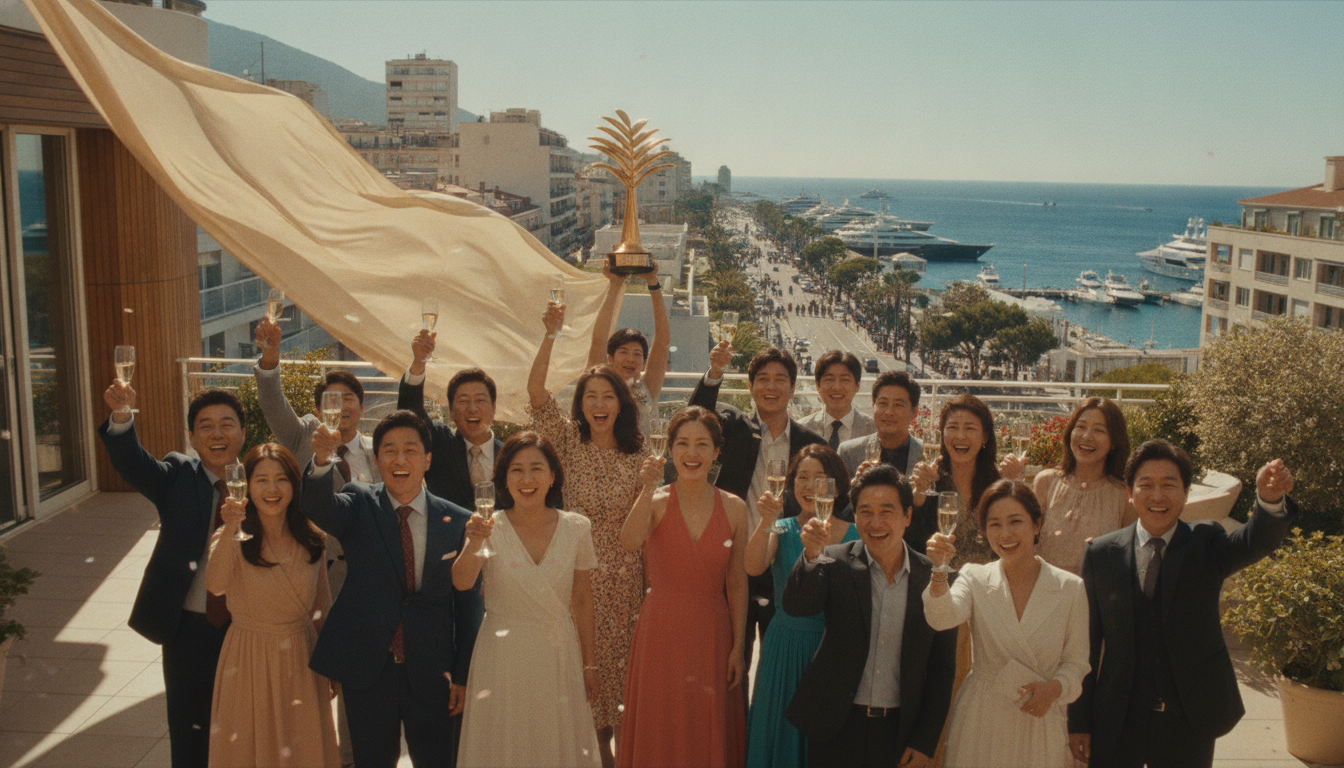
Another Cannes Film Festival has just wrapped up on the French Riviera, and as the flashbulbs fade and the red carpets are rolled away for another year, the conversation among cinephiles inevitably turns to the standout national cinemas. Here in May 2026, it’s impossible to ignore the formidable and consistent presence of South Korean film. Year after year, Korean directors, actors, and stories don’t just show up to the festival; they arrive with a creative force that demands attention and, very often, major awards.

For international fans who might have first fallen in love with Korea through K-dramas, the world of K-film can seem like a deeper, sometimes darker, but always artistically thrilling cousin. The global explosion of Parasite back in 2019 was not a fluke or a happy accident. It was the culmination of decades of groundwork, a cinematic ecosystem that fosters audacious talent, and a unique storytelling DNA that resonates powerfully with international juries. So, what is the secret? Why do Korean films continue to punch so far above their weight and capture the hearts of the world’s most discerning film critics? It’s a combination of a storied history, a new wave of global star power, and a fearless approach to genre and social commentary.
The Foundation: From Oldboy to the Palme d’Or
To understand Korea’s current success at Cannes, you have to look back more than two decades. While Korean films had appeared at the festival before, the true turning point for the modern era was 2004. That was the year Park Chan-wook’s electrifying revenge thriller, Oldboy, stunned audiences and won the Grand Prix, the festival’s second-most prestigious prize. The jury president that year, Quentin Tarantino, was a vocal champion of the film. This win was a seismic event; it announced to the world that Korean cinema was not just technically proficient but also artistically bold, visceral, and unafraid to explore the darkest corners of the human psyche.

This wasn’t a one-hit wonder. Park Chan-wook became a Cannes regular, eventually winning Best Director in 2022 for his masterful romantic mystery, Decision to Leave. He was joined by a cohort of auteur directors who consistently brought their work to the Croisette. Lee Chang-dong mesmerized critics with films like Poetry and the critically acclaimed Burning. Hong Sang-soo, with his prolific and distinctively minimalist style, became a festival fixture. And then came Bong Joon-ho. While he had been a celebrated director for years, his 2019 masterpiece, Parasite, achieved the ultimate prize: the Palme d’Or. It was the first Korean film ever to do so, and the decision from the jury was unanimous. This wasn’t just a win for a single film; it was the coronation of an entire national cinema movement that had been building momentum for years.
The “Hallyuwood” Effect: Global Stars and Bigger Budgets
The Korean Wave, or Hallyu, has fundamentally changed the landscape. The global adoration for K-pop and K-dramas has created a generation of South Korean actors who are legitimate international stars. This has a direct and powerful impact on the film industry. When an actor known to millions of fans worldwide stars in a new film, it immediately has a built-in global audience and, crucially, commands the attention of international distributors and festival programmers. This crossover appeal means more funding, bigger budgets, and more ambitious projects can get the green light.
You can see this effect clearly on the Cannes red carpet. Actors who are beloved for their drama roles are now celebrated as serious film festival contenders. The undisputed king of this domain is Song Kang-ho. A longtime collaborator of Bong Joon-ho and a living legend in Korea, his global profile has soared. His incredible talent was officially recognized at the highest level when he won the Best Actor award at Cannes in 2022 for his deeply moving performance in Hirokazu Kore-eda’s Broker. This win was a monumental moment, cementing his status as one of the world’s greatest living actors. The presence of such stars not only adds glamour but also provides a familiar entry point for international audiences who might be hesitant to dive into a subtitled film. It bridges the gap between the mainstream appeal of Hallyu and the high art of festival cinema.
A Genre-Bending Formula That Captivates Juries
If there is one defining characteristic of the Korean films that succeed at Cannes, it’s their masterful refusal to be boxed into a single genre. American and European cinema often maintain clearer lines between comedy, drama, thriller, and horror. Korean filmmakers, however, are experts at weaving these threads together into a single, cohesive, and emotionally potent tapestry. Parasite is the ultimate example: it’s a pitch-black comedy, a nail-biting thriller, a poignant family drama, and a searing social satire all at once. This tonal dexterity keeps audiences—and awards juries—on the edge of their seats.
This genre-blending is often in service of sharp, unflinching social commentary. Korean directors are fearless in their examination of the cracks in their own society. They tackle themes of class warfare, the trauma of history, corruption, and the failures of the justice system with a raw honesty that is both specific to the Korean experience and universally resonant. A film like Lee Chang-dong’s Burning is a slow-burn mystery on the surface, but underneath it’s a devastating critique of economic anxiety and disenfranchised youth. This depth and willingness to confront uncomfortable truths are precisely what prestigious festivals like Cannes look for. They seek films that aren’t just entertainment, but art that provokes thought and conversation long after the credits roll.
Your K-Film Cannes Starter Pack: Where to Begin
Feeling inspired to explore this incredible world of cinema? It can be daunting to know where to start. Here is a curated list of essential, Cannes-awarded K-films that will give you a fantastic introduction to the power and artistry of the industry. Think of this as your personal film festival, right from your couch.
1. Oldboy (2003): Winner of the 2004 Grand Prix. This is the film that kicked the door down. It’s a visually stunning and emotionally brutal revenge story that is not for the faint of heart, but it’s an absolute masterclass in filmmaking from Park Chan-wook. Its influence can still be felt in thrillers made all over the world today.
2. Secret Sunshine (2007): This film earned its star, Jeon Do-yeon, the Best Actress award at Cannes in 2007, a landmark achievement. Directed by the great Lee Chang-dong, it’s a powerful and gut-wrenching drama about a woman grappling with grief, faith, and forgiveness after a tragedy. Jeon’s performance is simply unforgettable.
3. Parasite (2019): The unanimous Palme d’Or winner and a global phenomenon. If you’ve only seen one film on this list, it’s likely this one. A re-watch, however, reveals even more layers of Bong Joon-ho’s genius. It’s the perfect entry point, blending entertainment with profound social critique.
4. Decision to Leave (2022): Park Chan-wook returned to Cannes to win the Best Director prize for this stylish and seductive neo-noir. It’s less violent than his earlier work but just as intense, weaving a complex web of obsession, duty, and impossible love. It’s a testament to how a master director can evolve their style while remaining utterly distinctive.
You can often find these films on major streaming services like Netflix or Hulu, as well as more specialized platforms like MUBI and the Criterion Channel, depending on your region. A quick search on a service like JustWatch can point you in the right direction.
—
Key Takeaways
A Rich History: South Korea’s success at Cannes is not a new 2026 trend. It’s built on a foundation laid over 20 years ago with landmark wins like Oldboy‘s Grand Prix in 2004. Genre Mastery: Korean filmmakers excel at blending genres—like thriller, comedy, and social drama—into a unique and compelling whole that captivates international critics. Hallyu’s Global Impact: The international stardom of Korean actors, fueled by K-dramas, has brought more attention, funding, and global distribution power to the Korean film industry. Fearless Social Commentary: K-films that succeed at Cannes often contain sharp, relevant critiques of societal issues like class inequality and historical trauma, making them resonate universally. * An Accessible Backlog: For new fans, there is an incredible catalog of award-winning films available to stream, providing a perfect entry point into the world of elite Korean cinema.
Found this helpful? Bookmark us! ⭐