Something has shifted in the K-drama landscape this year. As a critic who has seen the rom-com formula perfected, deconstructed, and rebuilt over 300-plus shows, I can tell you that the sweet, fated-to-be romances are taking a backseat. In 2026, the most compelling on-screen relationships aren’t about marrying your soulmate; they’re about being bound to your enemy, your past, or your revenge. The “Marry My…” trope has taken a deliciously dark turn, and honestly, I am completely hooked.
This isn’t just about a simple contract marriage anymore. We’re seeing narratives where the central “vow” is a commitment to a dark purpose, a psychological entanglement so deep it mirrors the finality of marriage. These dramas are exploring the possessive, obsessive, and often destructive side of devotion, and they are dominating the conversation, lighting up social media feeds after every weekly episode drop. Let’s break down how this intense new wave is redefining on-screen romance in 2026.
The Vow of Vengeance: ‘Teach You a Lesson’
When I think of an all-consuming commitment, my mind immediately goes to Kim Mu Yeol’s electrifying performance in the action-thriller Teach You a Lesson. While not a romance in the traditional sense, this drama is the perfect embodiment of the “Marry My Revenge” sub-trope. Kim Mu Yeol plays Na Hwa Jin, a character so singularly focused on his mission that it becomes his entire identity. As the Hindustan Times noted in its June 6, 2026, ending analysis, the central question was how far he would go “to expose the truth.”

The answer? All the way. Na Hwa Jin’s relationship isn’t with a person; it’s with his cause. Every action, every sacrifice is an offering to this singular goal. This is a character who has effectively married his vendetta. It’s a commitment that isolates him, pushes potential allies away, and demands his entire being. This is where Kim Mu Yeol truly shines. His portrayal is nuanced, showing the immense personal cost of such a vow. He’s not just a stoic action hero; he’s a man shackled by his own purpose. This 16-episode series, which just wrapped its run, proved that the most intense bond a character can have is with an unwavering, and dangerous, sense of justice. It’s a sobering look at what happens when “I do” means “I will stop at nothing.”
The Psychological Shackle: ‘Dear X’
If Teach You a Lesson is about marrying your cause, then late 2025’s Dear X was about the terror of being married to your past. This show was a masterclass in psychological tension, and as Dojeon Media aptly warned on December 11, 2025, it was a “Dark K-Drama Not for Weak Hearts.” I still get chills thinking about its final episodes. The drama dives deep into a toxic, inescapable relationship that feels less like a romance and more like a life sentence.
The “Marry My…” theme here is “Marry My Tormentor.” The narrative explores a bond built on manipulation, shared trauma, and a psychological dependency that’s as binding as any legal document. It brilliantly subverted rom-com tropes, turning moments that would typically be romantic into scenes of sheer dread. The classic wrist-grab isn’t a sign of burgeoning love; it’s an act of control. A shared secret isn’t a foundation for intimacy; it’s blackmail material. The drama’s low, moody lighting and a haunting OST that never once cracked the top of the charts only amplified the suffocating atmosphere. For its entire 12-episode run on a cable network, Dear X eschewed high Nielsen Korea ratings for a cult-like following that appreciated its unflinching look at the dark side of human connection. It’s a prime example of how 2026 dramas are finding success by catering to niche audiences who are tired of fairy-tale endings.
The Horrific Union: ‘If Wishes Could Kill’
Taking the dark romance trope to its literal, supernatural extreme is the horror hit If Wishes Could Kill. When Time Magazine broke down its ending on April 24, 2026, it highlighted the drama’s core theme: be careful what you wish for, especially when it comes to love. The premise revolves around a vow that unleashes a terrifying curse, effectively binding the protagonists in a “marriage” to a malevolent force.
Here, the trope becomes “Marry My Curse.” The relationship isn’t just unhealthy; it’s actively trying to kill you. Every episode that dropped on its streaming platform felt like a new, twisted marital spat with the supernatural. What made this 10-episode series so effective was how it used the language of romance—undying devotion, promises, and shared secrets—as instruments of horror. A declaration of eternal love becomes a terrifying omen. A cherished memento becomes a cursed artifact. The live-shoot production must have been a nightmare with the level of practical and special effects needed, but the result was a seamless, terrifying experience. It successfully climbed the Netflix Top 10 charts in several countries, proving there’s a global appetite for love stories that come with a body count.
The Career Contract: ‘K-Pops’
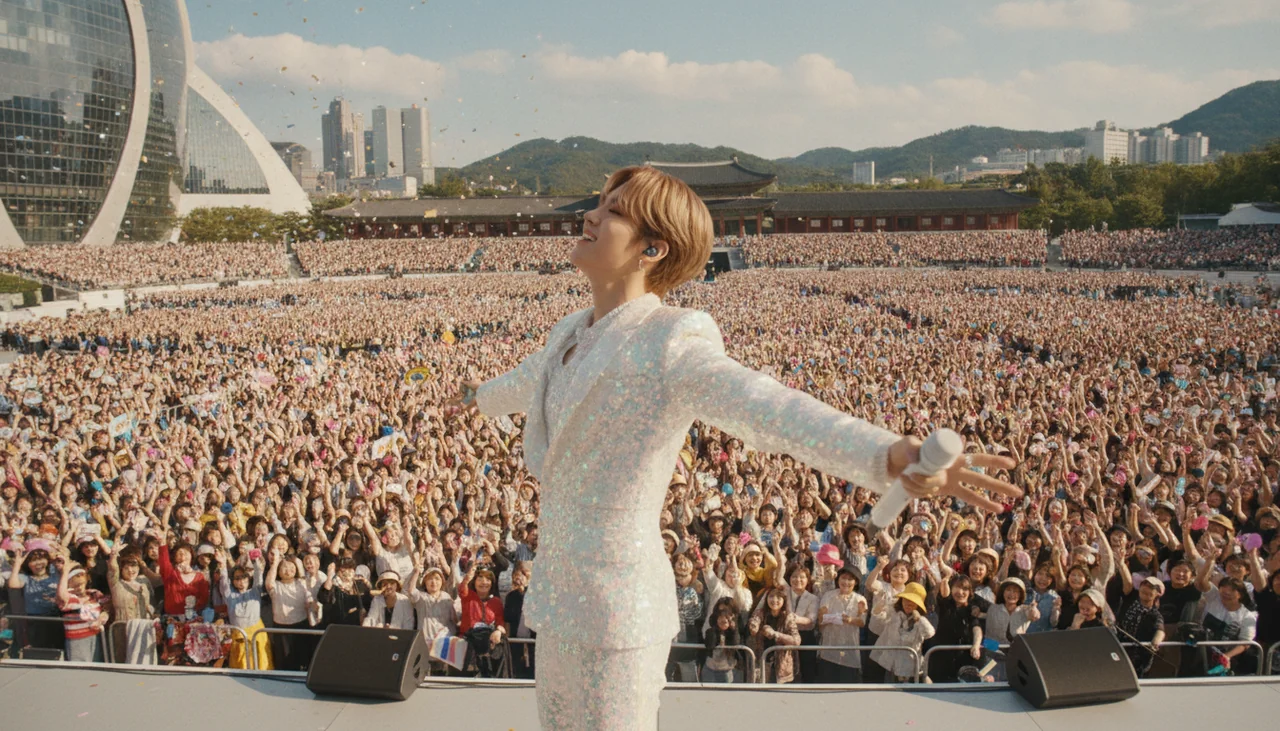
Not every interpretation of this theme has to be grim. The movie K-Pops, which hit theaters this spring, explored a much more relatable, modern dilemma: “Marry My Career.” As summarized by IMDb on May 30, 2026, the film’s central conflict boils down to a choice for the main character, Bj: pursue a life-changing world tour or stay for a relationship with Tae-Young.

This is the quintessential 21st-century contract. For many ambitious people, their career is their primary partner. It demands the most time, the most passion, and the most sacrifice. The film beautifully portrayed this internal conflict, showing how the allure of global stardom and the comfort of a personal connection can be mutually exclusive. It’s a story about choosing which vow matters more. While it’s a movie, its themes resonate deeply with what we’re seeing in K-dramas. The pressure to succeed, the sacrifices required, and the ultimate choice of what or who gets your “forever” is a narrative that feels incredibly current. It provides a lighter, more aspirational take on the “Marry My…” theme, reminding us that sometimes the most significant commitment we make is to our own dreams.
Why This Dark Trend is Dominating 2026
So, why are we so obsessed with these complicated, often dangerous on-screen unions? I believe it reflects a maturation of the audience. We’ve moved beyond the need for purely aspirational fantasies. Viewers today crave complexity, psychological depth, and stories that acknowledge the darker facets of devotion. These dramas provide a cathartic exploration of our own fears about commitment, control, and sacrifice.
Furthermore, global streaming platforms like Netflix have created a space where genre-bending, riskier shows like Dear X and If Wishes Could Kill can find their audience without the pressure of achieving a 20%+ domestic viewership rating on a major network like tvN. They can thrive in the global Netflix Top 10, building buzz through word-of-mouth. This has emboldened writers and directors to push the envelope, giving us stories that are more challenging, more memorable, and frankly, more interesting than the cookie-cutter rom-coms of years past. The “Marry My…” trope, in all its dark and twisted glory, is a sign that K-dramas are more confident and creatively ambitious than ever before.
Key Takeaways
Trope Evolution: The classic “contract marriage” has evolved into darker, more psychological themes like “Marry My Revenge” or “Marry My Curse.” Genre Blending: Romance is no longer a standalone genre. In 2026, it’s being powerfully fused with thrillers, horror, and action, creating hybrid dramas that defy easy categorization. Star Performances: Veteran actors like Kim Mu Yeol are finding fertile ground in these complex roles, delivering performances that are both critically acclaimed and beloved by fans. Audience Shift: Viewers are increasingly drawn to narratives with moral ambiguity and psychological depth, signaling a move away from simplistic, fairy-tale love stories.
Found this helpful? Bookmark us! ⭐